A small noise persists.
A pulse stumbles, then heads somewhere else.
Fragments draw closer, rub against one another, disappear before we can give them a name.
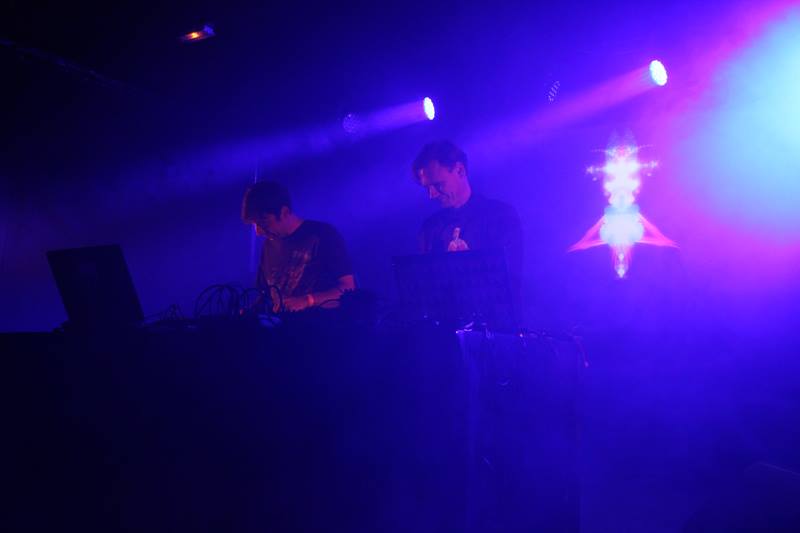
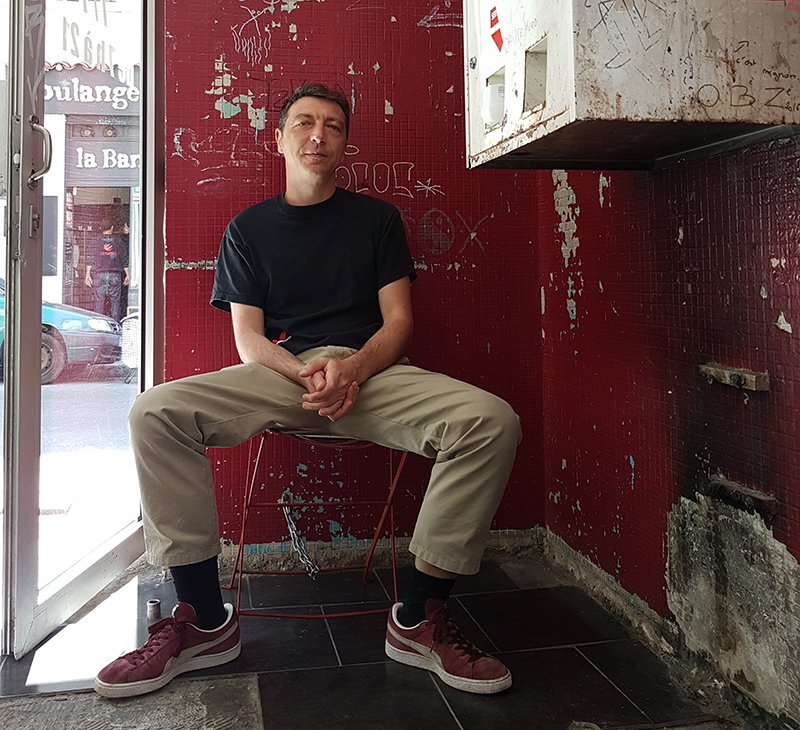
Poborsk does not exactly build electronic landscapes. He prefers places where sound-objects begin to take on a direction of their own.
There is something distinctly his in the way Patrice Curtillat never quite lets machines settle down. The electronic sounds seem perfectly controlled at first, then veer off. One rhythm catches onto another, a texture bends, a small mechanism starts turning askew. Elements change function along the way: what sounded like percussion becomes texture, a detail almost too small to notice suddenly shifts the whole piece.
This Session enters that world through its collisions, its malfunctioning little machines and its moving architectures.
There are angles, springs, surfaces gleaming in the dark. Tiny things suddenly take up a great deal of space. The music moves forward through controlled accidents, with the strange feeling that someone is moving the furniture while we are looking the other way.
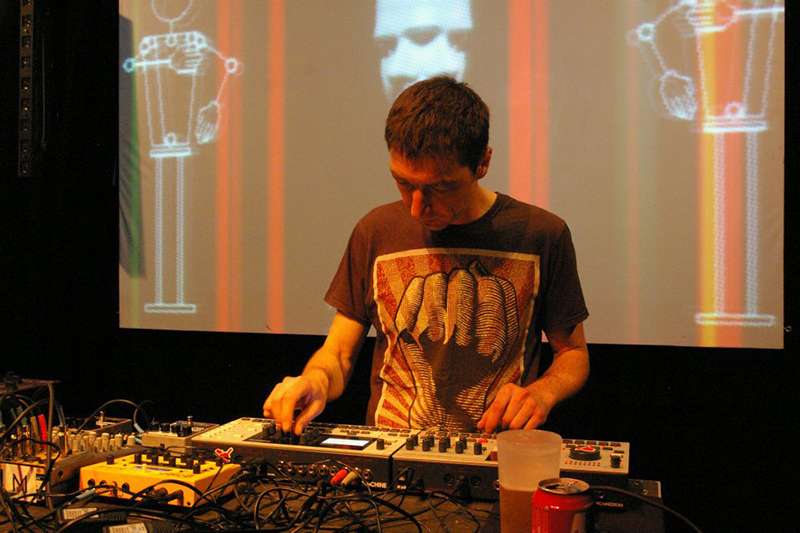
Could you trace your musical journey?
I started teaching myself guitar around the age of eleven, in 1986. Music filled the hours I spent alone at home. I began recording early, using two cassette decks to layer recordings of myself. Later came a four-track recorder, then my first drum machine at seventeen. I gradually left the guitar behind for synthesizers and continued experimenting on four-track until the late 1990s, when I joined Jahnin, a band formed by my friend Jean-Claude Menghi, playing machines. It was my first serious, semi-professional experience in a group. I would open our concerts with a solo set, which gave me my first real taste of the stage.
In 2000, I met Thomas Lanza, aka Wankers United, who became my closest musical partner. We soon started composing and performing together as Reuter & Belter, then founded the netlabel Plastiqpassion with Jean-Claude in 2004. In 2009, Thomas became one of the early figures associated with Skweee, and we launched Disques Mazout, inaugurated by a release from our new duo Cuverville.
In 2001, Thomas and I played at the Nouveau Casino in Paris, he DJing and me performing live, alongside Andy Maddocks of Gescom and Skam and Alex Perverett of Team Doyobi. Two years later, we met up with Andy again, this time with Rob Hall, Freeform and Quinnoline Yellow, for a short two-date French tour.
My first EP came out on Cactus Island in 2006, followed by my first album on Tsuku Boshi the following year. In 2008, Alex invited me to join ICASEA, the label he had co-founded, where I released two EPs and an album.
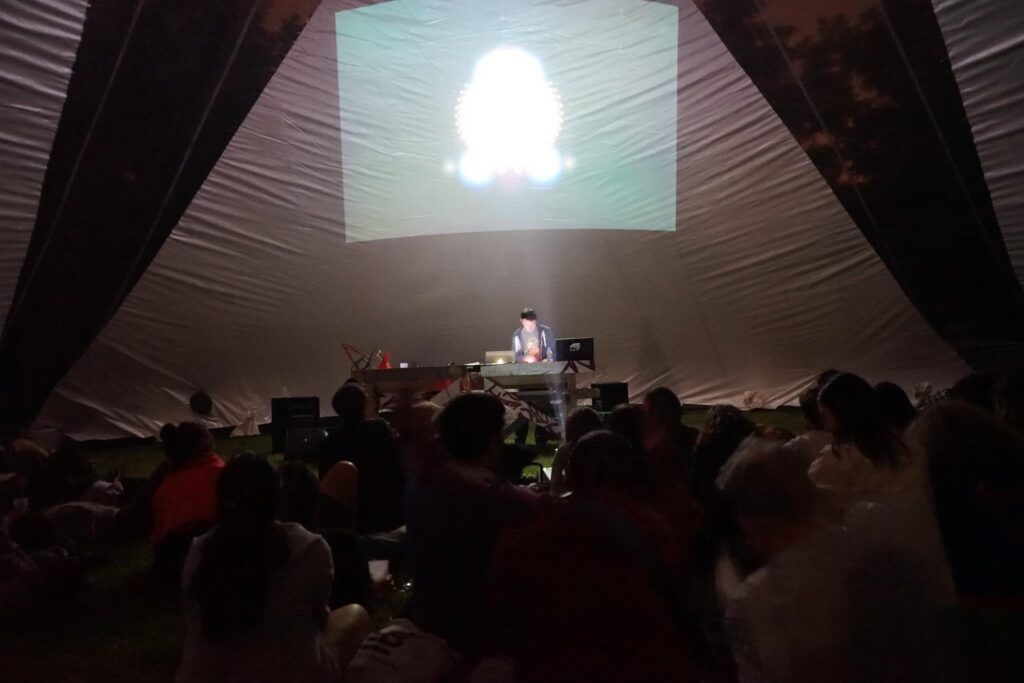
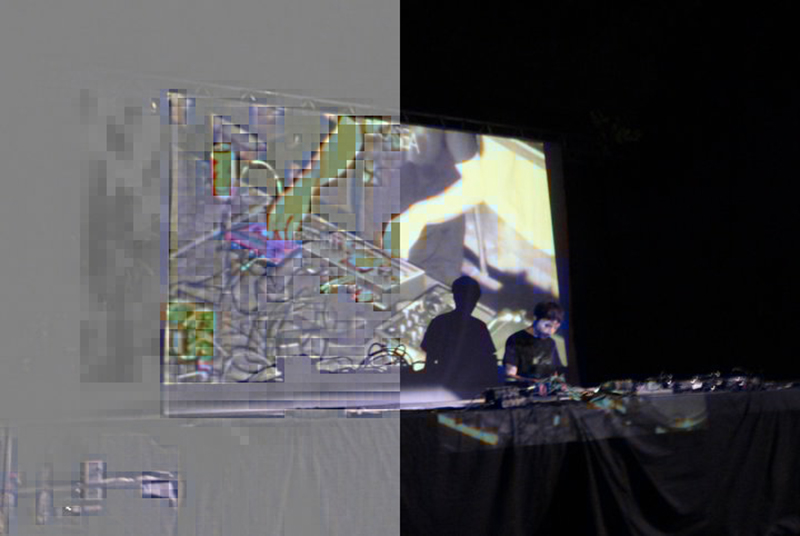
Around the same time, my collaboration with Seconde Nature in Aix-en-Provence took a new turn. After inviting me to perform and lead workshops, they commissioned an audiovisual live project combining my music and video work. This became Bestiaire, produced as part of Marseille’s 2013 European Capital of Culture programme. I went on to make videos for other artists until 2017.
In 2016, Autechre invited me to open their show at Le Sucre in Lyon. Andy was with them on that tour, so we crossed paths again. It was a strange, suspended moment for me, especially because discovering Autechre’s music had had such a profound impact on my own life.
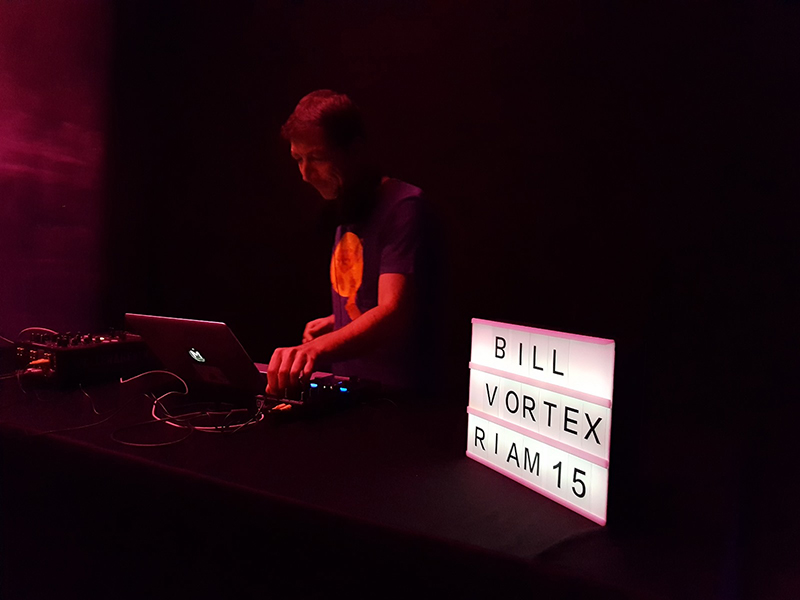
In 2017, I put Poborsk on a brief hiatus to focus on a more conventional side project, Bill Vortex, whose first record came out on Fred’s Serendip Lab. From 2020 onwards, Fred and I formed Nabil Vortex, a duo devoted to producing edits of Raï tracks.
In 2021, I joined the Marseille team at Lyl Radio, where I hosted Get in the Pobotron until the Marseille studio closed last year. Since 2024, I’ve returned to full-time work, which currently leaves me less time for music.
How did you discover modular synthesis? When did it happen, and what did you think of it at the time?
I discovered modular synthesis around the age of fourteen, when I came across Klaus Schulze’s Live, whose cover showed him surrounded by a huge Moog modular system. I later spotted modular instruments again on Abbey Road and in the A Clockwork Orange soundtrack. From Pink Floyd’s Synthi to the TONTO system used by Stevie Wonder, modular synthesis kept turning up in the music I was listening to, without me paying much attention to anything beyond the sound itself.
It was in the early 2000s, while listening to Morton Subotnick’s Silver Apples of the Moon, that I began to take an interest in it as a tool. But it was only when I had the chance to try Thomas’s system that I really felt the urge to bring modular synthesis into my own practice.
What have you been working on lately, and do you have any upcoming concerts?
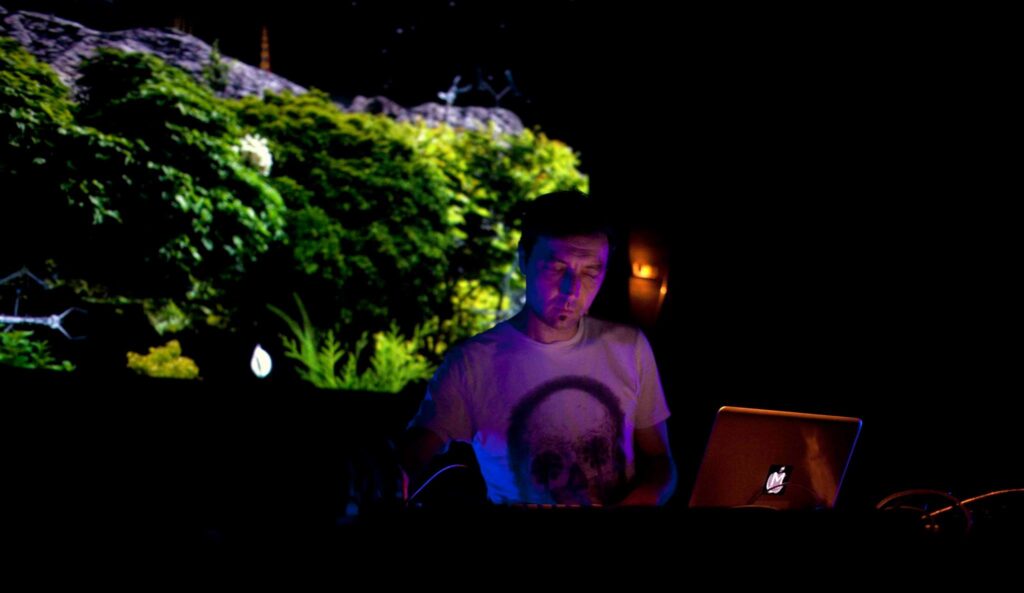
For the time being, I’m taking a temporary break from composition and approaching music in a more relaxed, recreational way. I play guitar every day, spend time with my system, explore newly acquired modules, and work with SuperCollider, with the help of an LLM. Whenever something I make feels right, I record it. I’m gradually building up material for future compositions.
I’m also working on a third Nabil Vortex EP, and a new Poborsk EP should be released soon on a Spanish label.
I don’t have any concerts planned at the moment. Offers have become much rarer over the past two years.
Your compositional process also involves acoustic sounds that you process or combine with electronic instruments. How do you bring the two together?
I’ve used a lot of acoustic sounds in my compositions, most of them recorded with a Zoom. I usually blend them with the electronics using effects or processes such as time-stretching. But most of the time, these sounds have a character of their own and don’t need much processing to fit naturally into my pieces.
Where do you usually start when composing?
I usually start with one of the basic elements of a composition: rhythm or melody. Sometimes a sound itself suggests a starting point. At other times, I begin with a broader idea or a technical process – a patch, a particular machine or effect – and see where playing and improvising takes me. More rarely, I try to translate a feeling or state of mind into music. And of course, some compositions begin simply with the desire to imitate another artist.
How do you see the relationship between sound and composition?
From my perspective as a composer, the relationship between sound and composition is central. Sound, timbre and the way they evolve have often determined the structure of my compositions.
To what extent do you distinguish between improvisation and composition?
I think improvisation can be considered a way of composing, so I wouldn’t separate the two. It can be seen as a spontaneous and immediate form of composition. I also use it while composing to surprise myself and bring some spontaneity into a more structured approach. Introducing random elements into triggers or parameters, sometimes right up to the final stages of a piece, can also recreate that sense of surprise.
I think improvisation can be considered a way of composing, so I wouldn’t separate the two. It can be seen as a spontaneous and immediate form of composition. I also use it while composing to surprise myself and bring some spontaneity into a more structured approach. Introducing random elements into triggers or parameters, sometimes right up to the final stages of a piece, can also recreate that sense of surprise.
What instrument do you most enjoy playing?
The guitar. I started playing regularly again during lockdown, after a twenty-year break. I’m more comfortable on a guitar neck than on a keyboard, and I plan to use that to develop the melodic and harmonic side of my future compositions.
You seem particularly interested in gesture and physical movement as ways of creating music. What is your preferred way of achieving that kind of expression?
I’m certainly interested in gesture, whether it means playing an instrument or manipulating a machine. It’s always a good way of bringing spontaneity and expressiveness into a composition. But I also like LFOs, automation, and the surprises produced by random modulation of parameters. That’s something I love about modular systems and computer-based music in general: letting a patch run and witnessing unexpected events.
Building instruments can itself be quite compositional, defining your sound palette, with each new module expanding your vocabulary. Would you say that choosing modules and building your systems are an integral part of your compositional process? Or is it the other way around, with you looking for a new module because you want to shape the sound of a particular idea?
I think I’m more concerned with the latter: I look for a module that will help me achieve a particular sonic goal. That also has to do with the nature of my system, which I built with sound design in mind more than composition.
How do you keep the spontaneity of analogue instruments alive when so much music is made entirely on a computer? A mouse click is not quite the same as turning a knob, is it? How does this fit with your other “compositional tricks”?
As a musician, I place a lot of importance on gesture, and it’s present in my music. But a spontaneous gesture, if it has been repeated many times – as often happens in electronic music, by different people and in similar contexts – doesn’t necessarily have the same freshness as a mouse click that opens up new sonic possibilities.
Personally, I enjoy both approaches and like to combine them in my compositions: gesture and automation. It’s difficult to faithfully imitate human playing, while automation can create gestures that are simply beyond human reach.
Modular musicians often seem to need more and more modules, with their appetite for new ones never quite satisfied. How do you explain that?
Without even getting into GAS or fetishism, I imagine there are several reasons. The search for the ideal sound, which can never really be completed. The need to renew yourself, to explore other paths and other ways of working. And perhaps also a certain attachment to the object itself, to the experience of handling something physical and tangible.
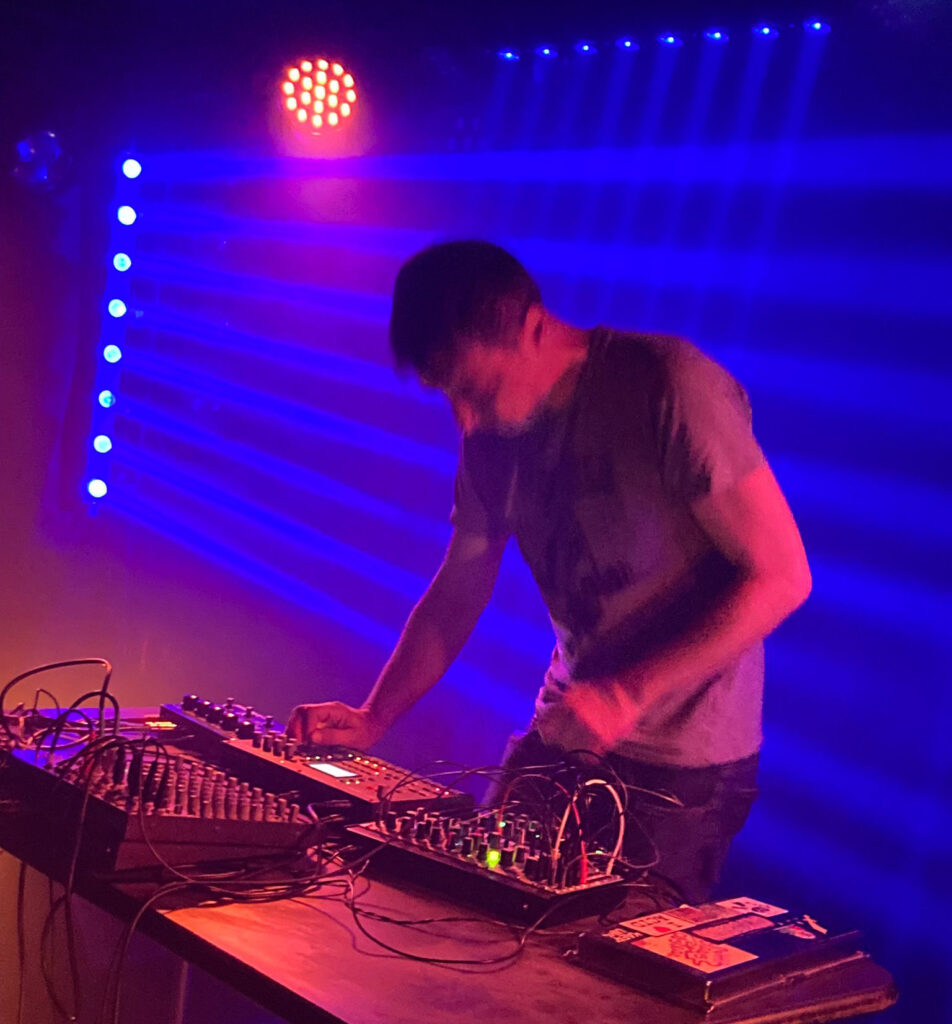
When did you buy your first modular system, and how has it evolved since then? What was your first module or system, and how long did it take you to get comfortable building your own synthesizer from individual components?
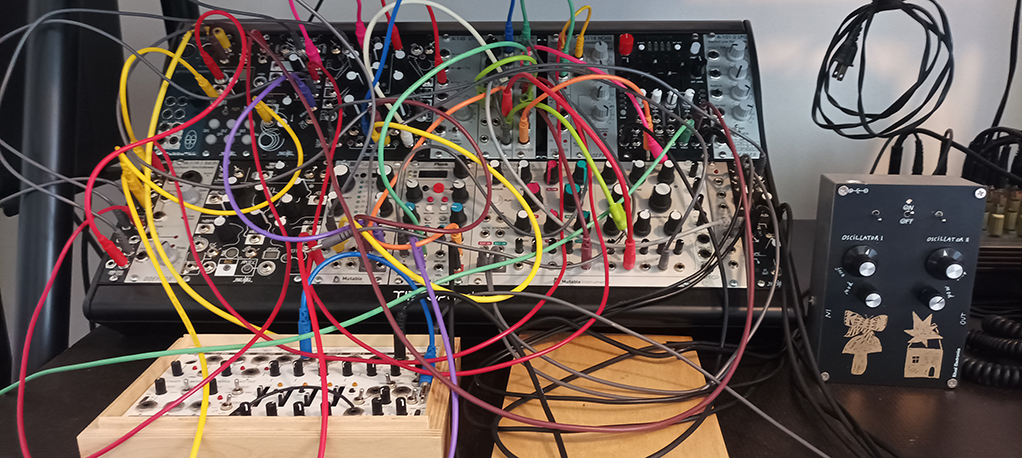
I started cautiously because I had a limited budget, so I bought a 0-Coast as my entry point into the modular world. After getting a low-cost case, the first module I bought was a Mutable Instruments Elements. I chose it because I’m very interested in physical modelling synthesis, and the module has the advantage of being largely self-contained: you can use it without a VCA or envelope, which suited my limited budget perfectly. I then gradually filled the case with second-hand modules.
Five years ago, I bought a small case for playing modular live. Since returning to full-time work, I’ve acquired a larger case and more creative modules. My Modulisme Session documents this recent evolution, which took place over just a few months. And like most modularists, I already have more purchases and replacements in the works.
Do you tend to use purely modular systems, or do you integrate external effects and equipment when you play or record?
I like the idea of working with a single system or machine, but my system isn’t complete enough for me to use it entirely on its own. For now, I still add external effects and a BeatStep Pro for sequencing.
What impact has discovering modular synthesis had on your compositional process, and on your life?
It added a new sonic palette to my compositional process, and a new form of expressiveness. It also had an impact on the way I play and on my live sound. More broadly, modular brought a playful element into my practice. I like thinking about a configuration or a patch, connecting everything, and not necessarily ending up with the result I had imagined, because I’m always learning. That element of surprise is quite refreshing.
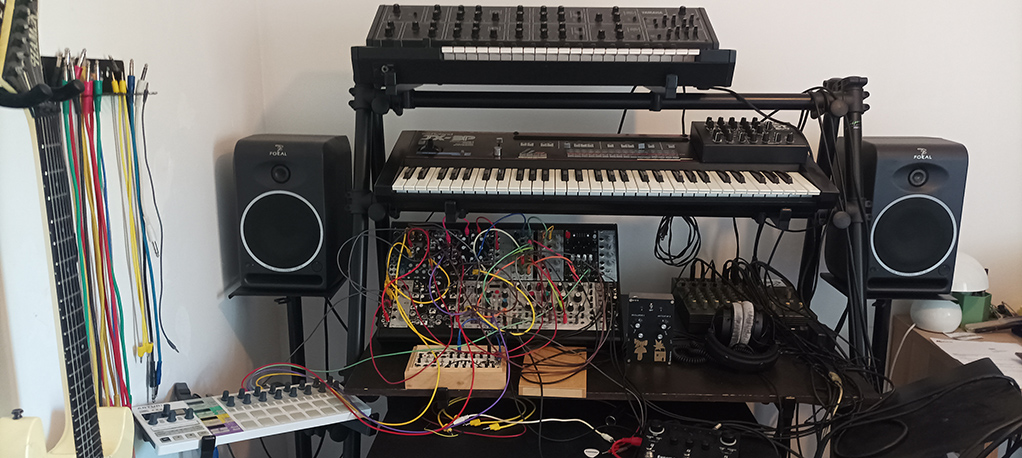
Can you describe how you patched and performed your Modulisme Session?
I recorded my Modulisme Session in several stages, as my system evolved. I would generally start with a basic patch prepared in advance, while leaving some points open – an unconnected modulation output, an unassigned parameter – so I could intervene and let things evolve as I went. It’s my way of leaving room for the unexpected within something that has been prepared.
Do you record directly without overdubbing, or do you eventually multitrack and edit the tracks in post-production?
I only avoid overdubs and post-production editing in projects specifically dedicated to improvisation. For my Modulisme Session, I imposed the constraint of making the pieces without overdubs. I only edited their length, cutting certain sections to make them easier to listen to.
Do you prepare your system in advance when playing live, or do you tend to improvise on the spot?
I always prepare my system in advance while leaving room for improvisation. I don’t completely patch the modular, for example leaving a cable plugged into a modulation output and deciding later where to connect it.
Which module could you not do without, or which one do you use most often in your patches?
I generally use utility modules the most, such as Maths or a simple multiple. But the module I’ve used most since acquiring it is Typhoon, a clone of Clouds. Its spectral processing capabilities connect with the way I approach software-based sound design, and I also love its versatility.
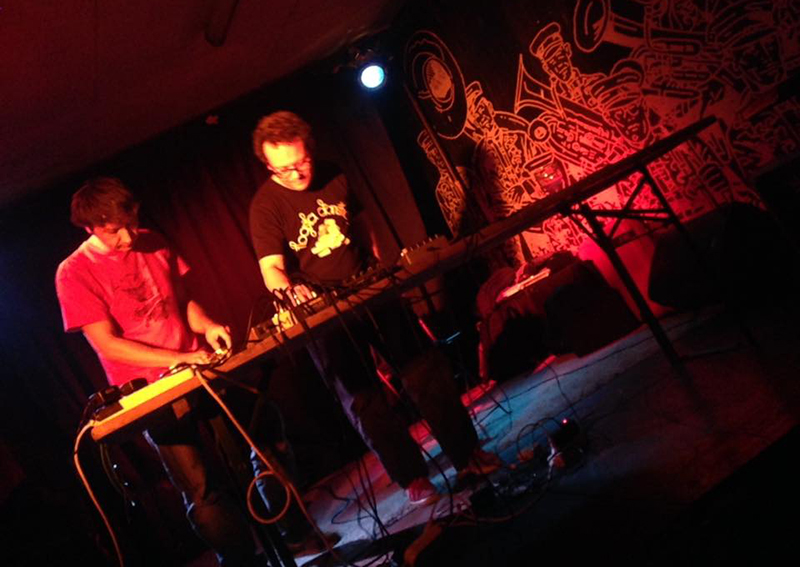
In your view, what can be achieved with modular synthesis that is impossible, or more difficult, with other forms of electronic music?
I think modular synthesis is actually more limited than computer-based music in terms of sonic possibilities. What is specific to it, and difficult to reproduce elsewhere, is the relationship with the interface, the gesture, and of course the character of certain modules. All these elements affect how we perceive the resulting music, filtering and colouring our listening in ways that are difficult for me to explain rationally.
Our relationship with music and instruments is full of cognitive biases. That’s what gives it something magical and mysterious. I think there’s an IKEA effect at work in modular synthesis: what we help build inevitably has more value for us.
Have you used different forms of software modular systems, such as Reaktor Blocks, Softube Modular or VCV Rack, or digital hardware with modular environments, such as Nord Modular, Axoloti or Organelle? If so, what do you think of them?
I have a Micro Modular, which I used extensively for a while. I love that synth for its sound and, of course, its modular aspect, although its limited power can be a little frustrating for a digital instrument. I would have loved to have a Nord Modular, which seems perfect for live performance. I’ve tried VCV Rack and think it’s great for many reasons, but I never really incorporated it into my practice. I prefer working with my own system.
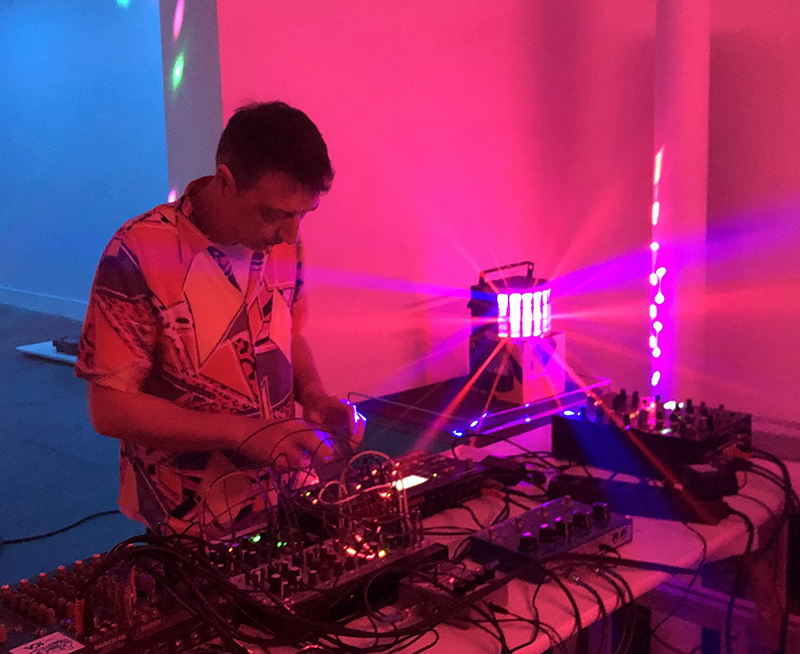
What would your dream system be?
A huge hybrid Eurorack/Buchla/Moog system with an amazing control interface.
Do you feel close to any other contemporary modular artists? Which ones?
I’m close to Bernard Filipetti as a friend. Our music is quite different, but we started a collaboration that we haven’t yet had a chance to pursue.
I also like Robert Batchas’s music. We played together once in Nice, and I really enjoyed seeing him perform with a hybrid system whose exact setup I can’t remember. I also feel a connection with Kirk Barley, aka Church Andrews, who sent me his music to play on my radio show. I really like what he does and would strongly recommend giving his music a listen.
Which modular pioneers have influenced you, and what drew you to them?
Morton Subotnick, Bernard Parmegiani, Suzanne Ciani, Herbie Hancock, François de Roubaix, Raymond Scott and Piero Umiliani. Above all, it was the quality and singularity of their music that influenced me, more than their technical approach or their use of modular synthesis itself