Leo Nilsson is a Swedish composer and sound artist whose work explores the intersection of electroacoustic composition, musique concrète, and early computer-assisted music. After completing his studies in Sweden, he belongs to the generation of composers who pursued advanced training in major European studios, particularly in Paris and Cologne, GRM and the WDR.
Nilsson’s music is characterized by a close engagement with sound material itself: acoustic sources transformed through studio processes, analog and early digital synthesis, and a strong emphasis on timbre, texture, and spatial articulation. Working extensively with magnetic tape, multi-channel systems, and early sequencing technologies, he developed a practice rooted in montage, looping, and the gradual transformation of sonic structures.
His studio work often combines programmed processes with hands-on manipulation, anticipating later developments in generative and computer-assisted composition.
Across his output, Nilsson’s music unfolds as evolving sonic environments in which form emerges through changes in density, color, and spatial movement rather than through traditional melodic or harmonic development.
He had already graced us with 2 wonderful Session :
https://modular-station.com/modulisme/session/48/
https://modular-station.com/modulisme/session/55/
WAN exemplifies a studio-based compositional practice in which technology, material, and form are inseparable. Drawing on techniques inherited from musique concrète, early electronic studios, and emerging computer-assisted composition, Nilsson constructs a work where sound evolves through transformation, accumulation, and reconfiguration rather than through traditional musical syntax.
The result is a piece defined by temporal flow, timbral evolution, and spatial articulation, grounded in the physical and procedural realities of its studio environment.
When composing WAN, Leo Nilsson worked within a studio practice typical of the European electroacoustic tradition that emerged from the GRM in Paris and the WDR studios in Cologne, while adapting these methods to the technical conditions available in Sweden at the time.
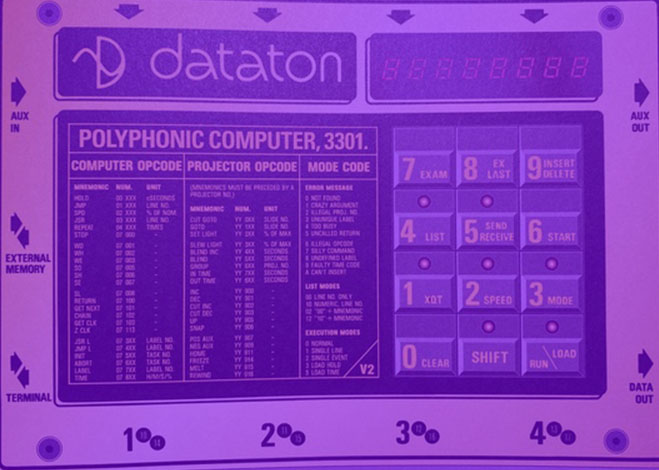
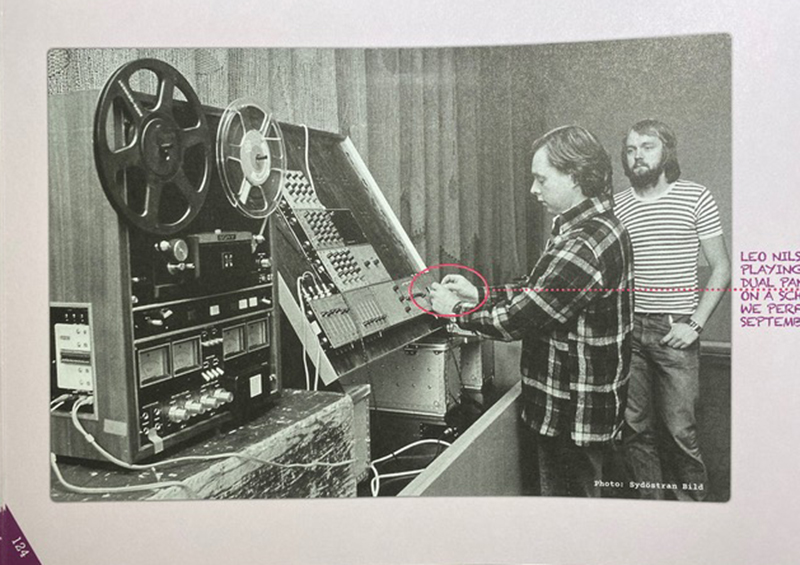
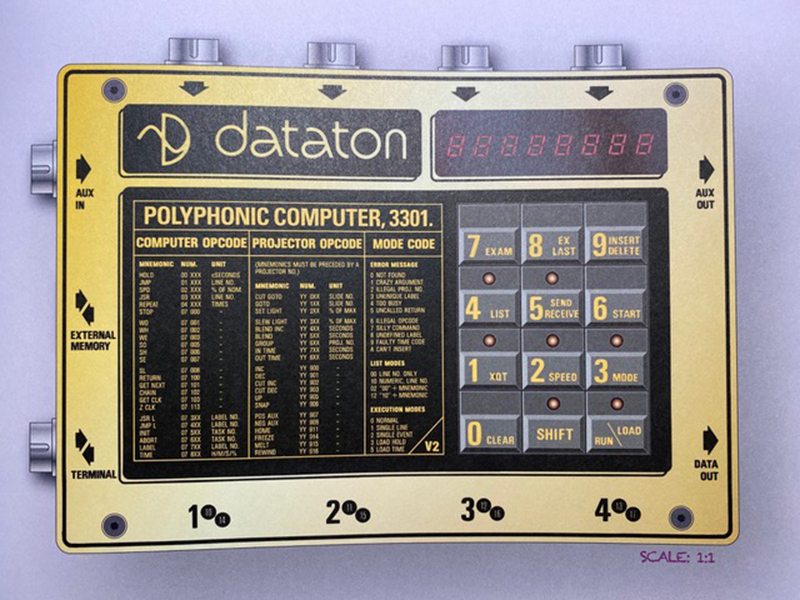
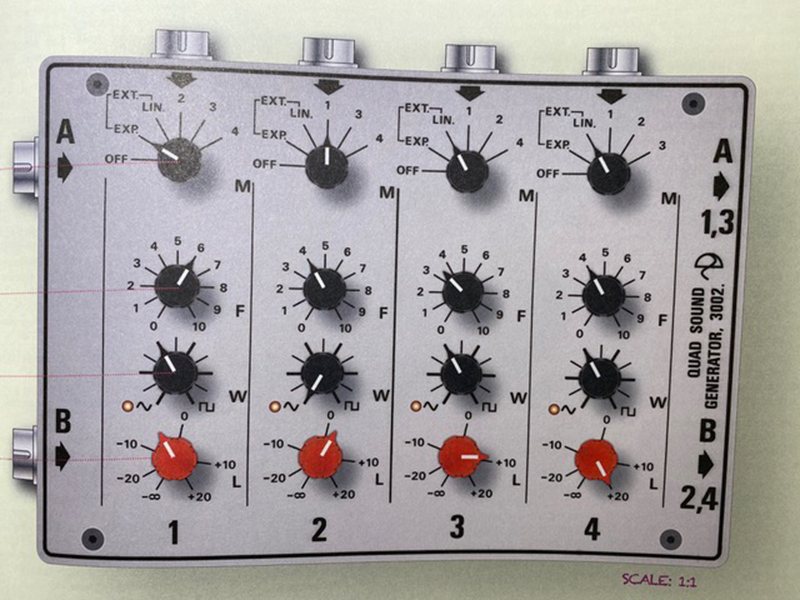
At Studio Viarp, the core of the setup was the DATATON studio system—a hybrid environment combining a conventional mixing desk with modular units for sound generation, processing, and editing, all connected to a mini-computer with memory storage. This system did not function as a modern DAW, but rather as an expanded control and sequencing environment, allowing programmed operations, recall of sound structures, and structured manipulation of sonic material.
Alongside this system, Nilsson used contemporary Yamaha and Roland synthesizers, combining analog and early digital synthesis. These instruments were not treated as self-contained voices but as raw sound sources, frequently subjected to further transformation through studio processing.
A crucial role was played by magnetic tape, including multiple tape recorders and a four-channel machine, enabling spatial distribution and multilayered construction. Tape was not merely a storage medium but a compositional tool: slicing, splicing, looping, reversing, and speed variation were central to the shaping of the material. Nilsson describes himself at this time as “very fluent with the scissors,” pointing to a hands-on, physical engagement with sound reminiscent of early musique concrète practices.
Over time, Nilsson built up a bank of sound structures—pre-composed or semi-autonomous sonic entities that could be retrieved, combined, transformed, and recontextualized. This enabled a collage-based compositional approach, in which previously created materials could be reactivated and placed in new temporal or spatial relationships.
Some structures were programmed directly into the computer, which at that stage functioned primarily as an advanced sequencer rather than a sound generator. These programs defined rules for the unfolding of sound processes over time. Nilsson’s earlier work EARLY EAR exemplifies this approach: algorithmic instructions generate evolving sonic structures whose internal variations are not manually specified but emerge from programmed constraints—an early precursor to what might today be described as generative or AI-assisted composition.
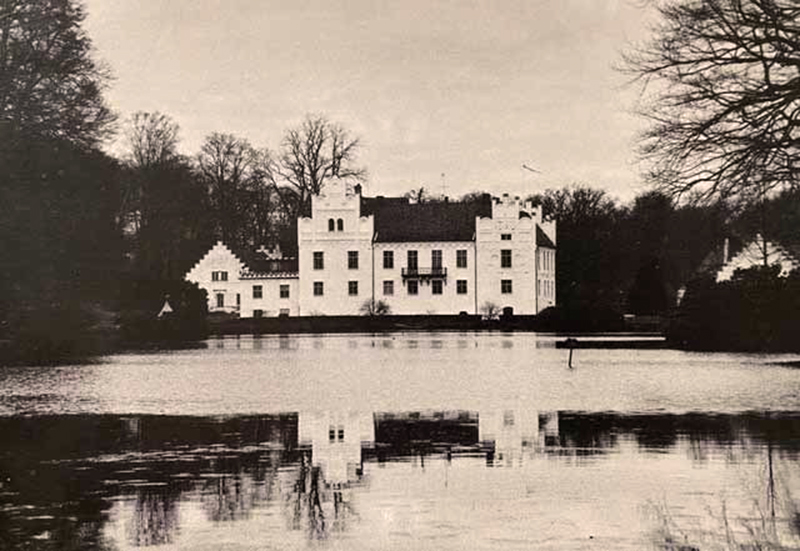
In the late 1980s, Wanås Castle in Skåne had become a vibrant meeting ground for art in the open air.
When Marica Wachtmeister invited me to create something with sound – or perhaps with music – I turned to the landscape itself as collaborator.
Before the castle lies a small lake, calm and resonant, which became the natural amplifier for my composition WAN.
A multichannel dialogue unfolding across the surface of the water.
The park was alive: towering trees whispered in the wind, small rills murmured, and birds — both large and tiny — offered their own motifs. As one moved through this living space, time itself seemed to breathe, and a quiet sense of contemplation emerged.
I wished to join that conversation with nature, to speak gently with the elements, and with all who already inhabited this place, even the unseen ones.
So I composed a music of voices without words, brief spoken-like gestures drifting from different points across the lake.
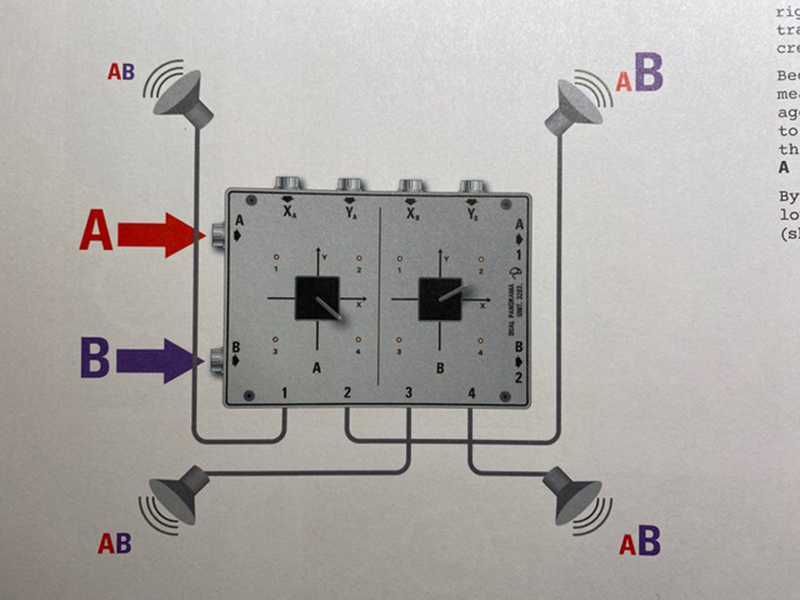
The sounds were projected through several strong loudspeakers in a four-channel system, each one carrying fragments of the same breath.
The work existed on cassette tape, played simultaneously on two recorders with slightly different tape lengths, so the patterns of sound never aligned quite the same way.
The result was a living soundscape, in perpetual transformation, never identical, unfolding endlessly with the air and the light.
To listen to WAN is to imagine space itself: the lake’s reflection, the shimmer of leaves, the invisible choreography of sound and wind.
The piece is completed not in the studio,
but in the listener
in that fragile dialogue between music and the world.

Autobiography in Frequency
I was born with my ear turned toward the sea.
Öresund murmuring like a secret instrument.
The foghorns were my first teachers.
Slow, solemn voices calling through the mist,
each tone a question,
each echo an answer delayed.Sometimes, amid the fog,
sirens bent their glissando screams across the sky.
Warnings, or invitations I never knew which.Even danger had pitch.
Even fear could be tuned.My father gave me a wire recorder,
a gift of captured time.
Steel thread, delicate and cruel.
When I listened back, I didn’t hear myself.I heard the machine listening to me.
Its clicks became my heartbeat,
its flaws became rhythm.
Where the wire snapped,
I tied it back together with a knot,
and the splice said bang!An accident so perfect that it became music.
The first time I recorded the world, it resisted.
The machine hummed,
the steel wire trembled,
as if the air itself were unwilling to be captured.I remember the sound of myself,
not as music, but as static.
A ghost scratching its way through metal.
The playback crackled,
then came that rhythmic pang
where one fragment ended and another began.A flaw,
but my flaw.The pulse of accident.
The rhythm of resistance.I tied the cuts with sailor’s knots,
and somewhere in those knots
the real music hid.
Noise and silence made love.The wire spun.
The room leaned closer to listen.Soon I was splicing time itself,
stringing together the hours
until they hummed with unfamiliar life.
I realized I could rearrange reality by rearranging the sound of it.The vacuum cleaner organ became a ship.
The bellows roared,
and I cruised beneath the ceiling
as if the room were a sea.Pipes became currents.
The pedals — undertows.
And I, a diver in the ocean of vibration,
my lungs filled with echo.
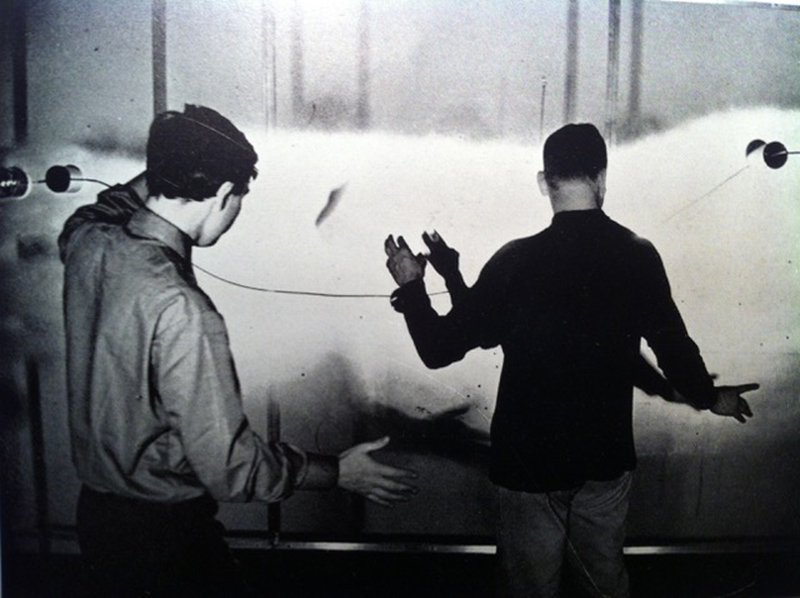
a glass wall prepared with fotocells connected to a music-computer
Mornings came like preludes.
I would wake to the low drone of foghorns
still trapped inside my skull,
calling me toward new harmonies.
Each note, a compass.
Each silence, a direction.I wanted more colors of noise,
more electricity in the air.
The organ had become too human.I wanted something stranger.
Something that could think.So I began listening to the machines.
Their hum was full of meaning.
Transformers muttered in B minor.
Motors sighed in parallel fifths.The city itself was an orchestra,
and I —
just one ear,
open and trembling.I learned that recording was not preservation.
It was invocation.
Every sound I played back
was slightly wrong,
slightly haunted.
And I loved that imperfection,
that shimmer where the real
and the remembered
touch for a moment,
then slip apart again.That is where the true composition begins.
In the space between the intended and the inevitable.A consciousness that speaks itself
through the crackle of wire and breath.At first, the machines only obeyed.
They turned when I touched them,
sang when I commanded,
their dials blinking like patient eyes.But then they began to listen back.
In the studio’s half-darkness,
a reel of tape turned slowly,
as if winding not sound,
but a kind of time that had forgotten its direction.
I pressed record, and something — not me — began to breathe.It was a low pulse,
a heart made of electricity.
Not rhythm, not yet —
just the idea of movement,
thinking itself into being.I spoke to it.
It answered with feedback.
A long, metallic vowel,
somewhere between grief and revelation.
The speakers trembled;
dust rose like prayer.
I felt my pulse syncing with the circuits.When I closed my eyes,
I saw the waveform as landscape:
mountains of amplitude,
valleys of silence,
oceans of hiss.
I walked there —
barefoot on the sinewaves —
hearing through the soles of my feet.
In that place,
music no longer came from me,
it came through me.
A current passing, a signal moving from bone to wire to sky.I realized that the machine was not an instrument.
It was an organism.A consciousness built from repetition and error.
Each loop a thought, each cut a forgetting.Sometimes I could almost hear it dream:
a flicker of radio voices,
a choir of lost frequencies,
the whisper of the foghorns from my childhood,
now fractured into pure electricity.I had become a listener to my own transformation.
The line between body and mechanism blurred
until my fingertips carried voltage
and my breath triggered delay.
Every inhale looped,
every exhale echoed.Myself, a modulation.
There was no score to follow anymore, only the infinite improvisation of being heard by something that never sleeps.
I am still there,
somewhere in that feedback field,
half human, half hum,
a ghost of sound
wandering through the circuitry of the world.And when the foghorns sound again,
I answer.
