“Organic Orgy” for organ and electronic instruments was made by Ernie Morgan, in Oakland on Jan 23, 1970.
Ernie passed away in 2016, and he had largely stopped doing electronic music by 1975 or 1976.
I knew Ernie during our years together as post-graduate students at the University of California, San Diego, between 1971 and 1975.
We worked together on several projects during that period.
Before that, Ernie had gotten his Master’s degree from Mills College in Oakland, Ca.
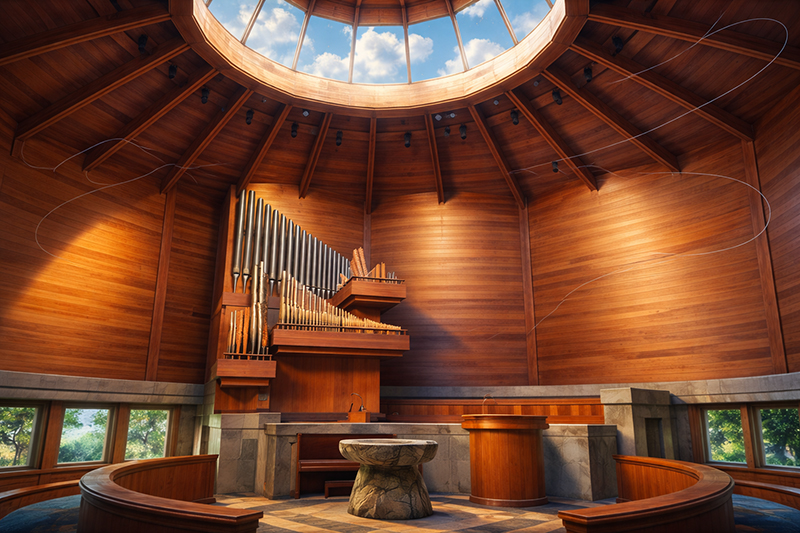
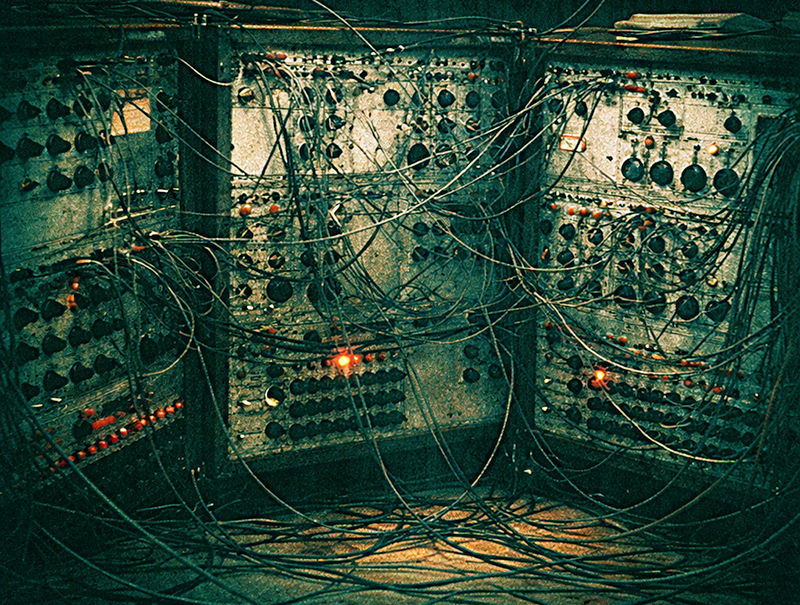
The piece presented here, “Organic Orgy” for organ and electronic instruments, comes from that period. It was made in 1970, using the Organ in the Chapel at Mills College and a set of electronic instruments. No patch diagrams exist for the piece, nor are there any extant listings of what the electronic instruments were.
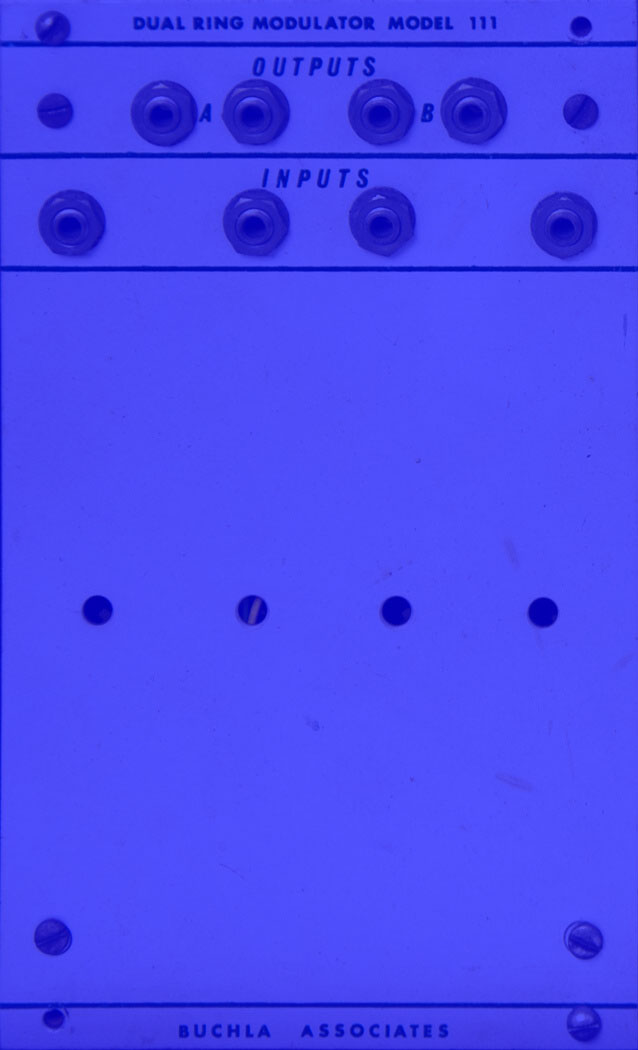
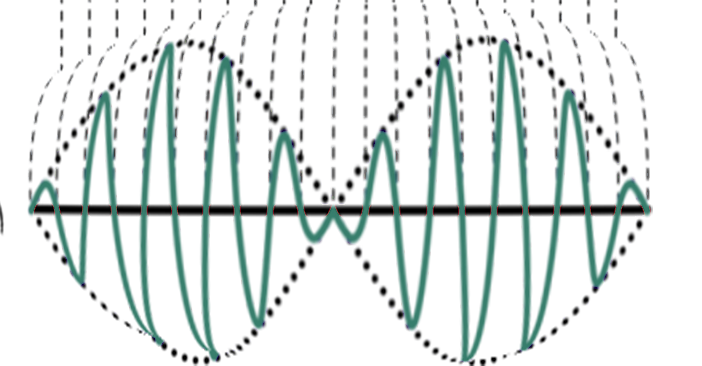
Using my ears, I can tell that there must have been an analog tape recorder used here – the use of a short tape delay in some parts of the piece is very obvious, especially in the latter half of the piece. Also, some kind of amplitude modulation device, which is being controlled by a low frequency oscillator which is changing frequency, for faster and slower modulations, is being used. And there’s some kind of distortion unit, maybe a ring modulator, that occasionally adds harmonics to a sustained cluster, making it brighter and noisier in timbre. Aside from that, I can’t tell much else about how the piece was made. I have vague memories of Ernie talking about the piece sometime in the early 70s, saying that they had made it on the organ in the chapel at Mills, and that they had brought electronics to the chapel to modify the sound of the organ. Other than that, I have no recollection of the conversations.
Ernie and I were too busy with our current work (at the time) to spend much time ruminating about the past.
When I left UC San Diego in 1975, I mostly stopped communicating with Ernie. I do remember a pleasant visit to Oceanside, Ca, where he was living, in 1979. By this time he had largely stopped composing electronic music. In 2016, I got an email from Mary Morgan, Ernie’s widow, who I had not known during my time in San Diego. She and Ernie had married after my time there. She said that she had all these tapes from her late husband, and not being a musician herself, did not know what to do with them. I agreed to have her ship the tapes to me in Australia, and she provided some money to have a large selection of the tapes transcribed to digital format. This was done, and several of the pieces from the collection have appeared in earlier editions of Modulisme. (In fact, Philippe Petit also has a copy of these pieces.) Some of these pieces, I was familiar with, and so was able to write about them. But Organic Orgy was a surprise to me. Other than the fact that Ernie had made it, and I was familiar with its existence, it was largely an unknown piece to me.
On the back of the box that contains the original recording is the following information:
“Organic Orgy for Organ and Electronic instruments. Another alias is Prelude and Fugue. Part II in a series of toccatas for organ and electronic instruments. [Dave Berny also plays some organ also.] Ernie Morgan. @3 and ¾ ips.” Aside from that, there is no other written information about the piece. I have no idea who “Dave Berny” (if that’s the proper spelling of his name) was, nor have I been able to trace anything about him. That he took over some of the organ playing duties in the later part of the piece, while Ernie played electronics is an assumption I’m making in my listening to the piece.With the idea that one way to learn about an existing piece of electronic music is to listen to it – carefully and deeply – I have listened to the piece (it’s 65 minutes long) several times.
I noticed the alternating of organ passages and electronic passages.
In the electronics passages, there is a persistent short tape delay.
The constant changes of musical texture/gesture is also notable.
The organ work has a number of different textures.
So over the course of an hour, I hear a sense of constant change. Some areas are revisited, but there is not a lot of repetition over the course of an hour. I’m not sure that making a chronological listing of textures of the piece is such an interesting or rewarding activity, but it might be a start in coming to understand more about this large scale improvisatory work. (I’m presuming it’s improvisatory – until some kind of score is found, I’m going to assume that.In any case, after several listenings, I’m very impressed with the work – the imagination displayed in the choices of musical gestures and textures I find most impressive. I hope that other listeners to this piece can find it as rewarding as I did.
I had four years of interacting with Ernie, so I’m somewhat familiar with his ideas. I hope the listener, who never had a chance to swap ideas with him, would also find listening to this piece equally rewarding.
Warren Burt July 28, 2024You may also be interested in these other works from Ernie Morgan :
https://modular-station.com/modulisme/session/60/And WEB (Warren Burt, Ernie Morgan, Bruce Rittenbach)
https://modular-station.com/modulisme/session/67/